02 Dec

A Breakdown refers to a price movement that leads to the breach of a support level. This is often accompanied by heavy selling pressure and a sharp price decline. Traders use breakdowns to identify bearish market trends and capitalize on opportunities for short-selling or exiting long positions. Understanding breakdowns is essential for traders who rely on chart patterns and technical indicators to make informed decisions.
In technical analysis, traders view the breakdown of support levels as a strong signal that the market is under the control of bears, typically resulting in increased selling pressure. A breakdown often marks the beginning of a downtrend.
Read More: Trading Chart Patterns: What Are Chart Patterns? + PDF
Key Concepts of a Breakdown
- Support Levels:
- A support level is a price point where buying interest is strong enough to prevent the price from falling further.
- When the price breaks below this level, it suggests that sellers have overwhelmed buyers, potentially triggering a further decline.
- Volume Confirmation:
- A true breakdown is often accompanied by increased trading volume, indicating strong conviction behind the price movement.
- Low volume during a breakdown could signal a false move or lack of commitment from traders.
- Retest of Broken Support:
- After a breakdown, the price often retests the former support level, which now acts as resistance.
- This retest provides traders with an additional confirmation of the breakdown.
- Continuation Patterns:
- Breakdown patterns are typically part of continuation patterns such as descending triangles, bear flags, or head-and-shoulders formations.
- These patterns indicate the resumption of an existing bearish trend.
Explore more: What is Crypto Screener? The Best Crypto Screener

How to Identify a Breakdown
- Monitor Support Levels:
- Use horizontal or trendline support levels to identify key price zones where breakdowns might occur.
- Look for Confirmation Signals:
- Combine breakdown identification with other technical indicators, such as Relative Strength Index (RSI) or Moving Averages, to confirm the move.
- Analyze Volume Patterns:
- Verify the breakdown with a significant spike in trading volume.
- Pay Attention to Market Context:
- Consider broader market trends and sentiment, as breakdowns are more reliable in bearish markets.
Breakdown vs. Breakout
While a breakdown refers to the price falling below a support level, a breakout is the opposite, where the price moves above a resistance level. Both concepts are crucial in technical analysis, but breakdowns specifically cater to bearish strategies.

Technical Indicators to Spot Breakdowns
- Moving Averages:
- Moving averages can act as dynamic support levels. A breakdown occurs when the price falls below key moving averages, such as the 50-day or 200-day average.
- Bollinger Bands:
- A price moving outside the lower Bollinger Band can indicate a breakdown, especially if accompanied by high volume.
- Relative Strength Index (RSI):
- An RSI below 30 suggests oversold conditions, often seen during or after breakdowns.
- MACD (Moving Average Convergence Divergence):
- A bearish crossover in the MACD can provide additional confirmation of a breakdown.
Read more: Weighted Moving Average (WMA): A Comprehensive Guide for Traders

Common Chart Patterns Leading to Breakdowns
- Descending Triangle:
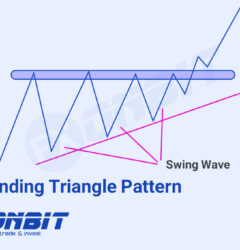
- A bearish continuation pattern where the price makes lower highs while testing a horizontal support level. A breakdown occurs when the support is breached.
- Head and Shoulders:
- A reversal pattern where the price forms three peaks, with the middle peak being the highest. The breakdown happens when the neckline is broken.
- Bear Flag:
- A consolidation pattern that occurs during a downtrend. The breakdown happens when the price exits the pattern to the downside.
Read more: Mastering Ichimoku Cloud Trade; Specialized Topics
Strategies for Trading Breakdowns
- Entry Points:
- Enter short positions as soon as the price breaks below the support level.
- Alternatively, wait for a retest of the broken support level to confirm the move.
- Stop-Loss Placement:
- Place stop-loss orders slightly above the broken support level to limit potential losses in case of a false breakdown.
- Target Setting:
- Use the height of the prior consolidation range or chart pattern to estimate the potential price target.
- Fibonacci retracement levels can also provide target zones.
- Volume-Based Confirmation:
- Ensure that the breakdown is supported by a noticeable increase in trading volume before committing to a trade.
- Combine with Fundamental Analysis:
- Consider economic data, earnings reports, or news events that may validate the technical signal.
Explore more: Understanding Volume in Trading: A Beginner’s Guide
Risks of Trading Breakdowns
- False Breakdowns:
- Occur when the price briefly moves below the support level but quickly reverses back above it.
- These can lead to premature exits or stop-loss triggers.
- Whipsaw Movements:
- High volatility near support levels can create sudden price swings, complicating breakdown identification.
- Over-Reliance on Technicals:
- Ignoring broader market sentiment or fundamentals can lead to inaccurate interpretations of breakdowns.
- Volume Misinterpretation:
- A lack of volume during a breakdown can mislead traders into taking trades without sufficient confirmation.

Real-Life Examples of Breakdowns
- Bitcoin 2021 Correction:
- Bitcoin’s price broke below a critical support level near $50,000, leading to a rapid decline to $30,000. The breakdown was accompanied by increased selling volume.
- Tesla Stock in 2022:
- Tesla’s stock price broke below a key support level at $200, confirming a bearish trend amid broader market sell-offs.
Managing Trades in a Breakdown
While holding short positions, traders can use indicators like moving averages to decide when to close their positions. For example, if the price closes above a moving average, it might be a signal to exit the trade. If a trader believes the breakdown is the start of a long-term downtrend, they can use longer-period moving averages to maximize their profit from the decline.
Read More: What is Support and Resistance Lines in Trading
Conclusion
Breakdowns are pivotal moments in technical analysis that indicate potential bearish market moves. By identifying support levels, analyzing volume, and understanding associated chart patterns, traders can effectively use breakdowns to inform their trading strategies. However, caution is essential, as false breakdowns and volatile conditions can lead to losses. Combining technical analysis with broader market insights ensures more reliable decision-making in trading breakdowns.
Related Article