30 Dec

A trading journal is a comprehensive record of your trades and the details surrounding them. It’s a powerful tool for self-improvement, enabling traders to analyze their performance, understand their behavior, and refine their strategies. This article will explore what a trading journal is, why it’s essential, and how to create and use one effectively.
Learn more about Trading Plan and what is it?
What is a Trading Journal?
A trading journal is a detailed log where traders document the specifics of their trades. It typically includes:
- Trade Details: Entry and exit points, position size, profit/loss.
- Market Context: The market conditions, instruments traded, and analysis leading to the trade.
- Reasoning: Why the trade was taken, including strategies and indicators used.
- Emotions and Psychology: Your mindset before, during, and after the trade.
It can be maintained in a spreadsheet, specialized software, or even a physical notebook, depending on your preference.
Explore more: Overcoming FOMO: The Fear of Missing Out

Why is a Trading Journal Important?
1. Performance Tracking
A journal allows you to track your trading results over time. By analyzing your performance, you can identify strengths, weaknesses, and patterns that influence profitability.
Read more: FXonbit CandleStick Pattern Finder Service: Your Gateway to Smarter Forex and Crypto Trading
2. Improving Discipline
Writing down trades enforces discipline. You’re less likely to deviate from your strategy when you know you’ll need to justify your actions in your journal.
3. Identifying Patterns
Reviewing past trades can reveal recurring mistakes or successful strategies. This helps in optimizing your trading approach.
4. Psychological Insight
Understanding your emotional state during trades helps address issues like fear, greed, or overconfidence, which often lead to poor decisions.
Read More: Top 10 Forex Trading Strategies for Consistent Profits
Explore Now: The Ultimate Guide to Cryptocurrency 2025
How to Create an Effective Trading Journal
Step 1: Choose a Format
Decide whether you prefer a digital format (e.g., Excel, Google Sheets) or a physical notebook. Digital tools often allow for easier analysis and data visualization.
Step 2: Define Key Metrics
Include the following in your journal:
- Date and Time: Record when the trade was entered and exited.
- Instrument: Specify the currency pair, stock, or other instruments traded.
- Direction: Note whether the trade was a buy (long) or sell (short).
- Entry and Exit Points: Log the exact price levels.
- Position Size: Document the size of the trade.
- Stop Loss and Take Profit: Record the risk and reward parameters set.
- Outcome: Note profit or loss in both percentage and monetary terms.
- Reason for Trade: Summarize the strategy and indicators used.
- Market Conditions: Describe the context, such as trends, volatility, or news events.
- Emotional State: Record how you felt (e.g., confident, anxious) and how it affected your decisions.
Read about Forex: Forex Trading Benefits: Opportunities and Challenges Every Trader Must Know
Step 3: Add Notes and Screenshots
Include notes about what went well or poorly. Attach screenshots of charts to visually analyze setups and outcomes.
Step 4: Organize for Analysis
Structure your journal to make reviewing past trades easy. Use filters or categories to analyze trades based on specific conditions or strategies.
Explore more: What is Crypto Screener? The Best Crypto Screener

How to Use a Trading Journal Effectively
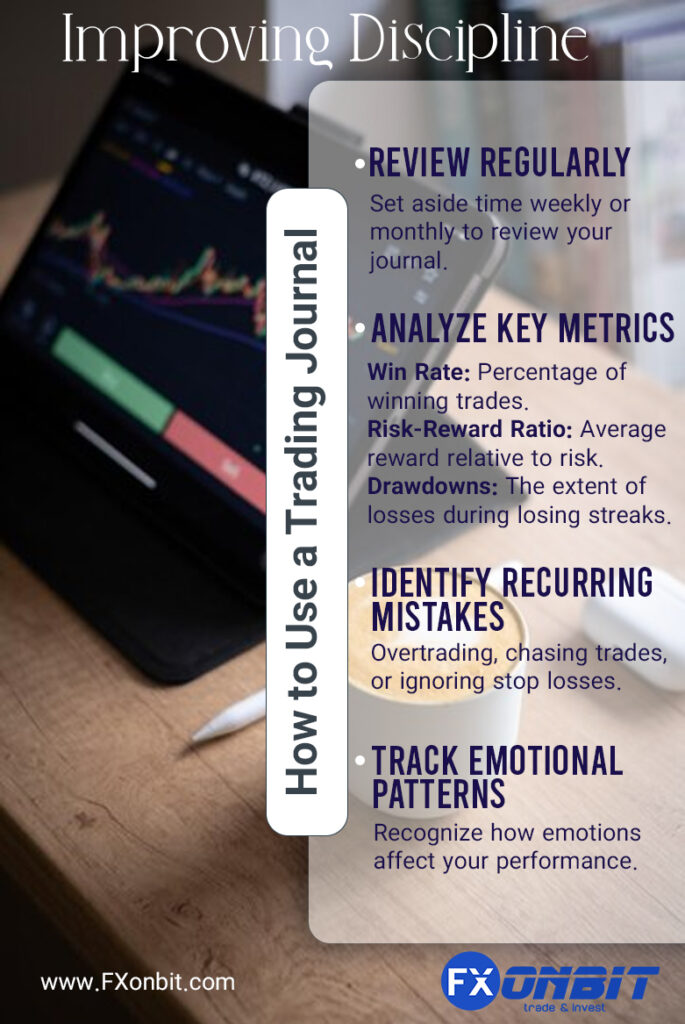
1. Review Regularly
Set aside time weekly or monthly to review your journal. Look for patterns in your successes and failures.
2. Analyze Key Metrics
Focus on:
- Win Rate: Percentage of winning trades.
- Risk-Reward Ratio: Average reward relative to risk.
- Drawdowns: The extent of losses during losing streaks.
3. Identify Recurring Mistakes
Spot patterns in losing trades, such as overtrading, chasing trades, or ignoring stop losses.
4. Adjust Strategies
Use insights to refine your trading strategies. For example, if a certain setup consistently performs poorly, consider discarding it.
5. Track Emotional Patterns
Recognize how emotions affect your performance. Implement rules to mitigate issues, such as avoiding trading after consecutive losses.
Example of a Trading Journal Entry
| Date | Instrument | Direction | Entry Price | Exit Price | P/L ($) | Reason for Trade | Market Conditions | Emotion | Notes |
|---|---|---|---|---|---|---|---|---|---|
| 2024-12-30 | EUR/USD | Long | 1.1050 | 1.1100 | +50 | RSI Oversold, Trendline | Bullish, Low Volatility | Confident | Good setup, followed plan |
| 2024-12-31 | GBP/USD | Short | 1.2500 | 1.2550 | -50 | News-driven Trade | Volatile, Uncertain | Anxious | Entered too early |
Tips for Maintaining a Trading Journal
- Be Honest: Record all trades, even those that don’t align with your plan.
- Stay Consistent: Update your journal after every trade.
- Keep It Simple: Avoid overcomplicating entries; focus on actionable details.
- Use Tools: Leverage charting tools and software to automate parts of the process.

Conclusion
A trading journal is an indispensable tool for any serious trader. By documenting and analyzing your trades, you gain valuable insights that can enhance your skills, improve discipline, and increase profitability. Start maintaining a trading journal today, and watch your trading performance improve with consistent effort and reflection.
Related Article