25 Jan
Crypto Screener for Investing! Crypto screeners are versatile tools that cater to various trading styles, whether you’re a day trader looking to capitalize on short-term market movements or a long-term investor aiming for steady growth. Understanding how to tailor your screener to match your trading style can significantly enhance your decision-making and overall success in the cryptocurrency market. In this guide, we’ll explore strategies for using crypto screeners effectively for both long-term investment and day trading.
Start Our Crypto Screener Dashboard
What Is a Crypto Screener?
A crypto screener is a platform that allows traders to filter and analyze cryptocurrencies based on various criteria, such as price, volume, market cap, and technical indicators. By using a screener, traders can identify opportunities that align with their trading strategies without having to manually analyze the entire market.
Explore more: What is Crypto Screener? The Best Crypto Screener
Tailored Strategies for Long-Term Investors
Long-term investing is about building a portfolio that can weather market volatility and deliver consistent growth over months or years. By using a crypto screener effectively, investors can pinpoint high-quality assets and make informed decisions. Below is an expanded guide to help you optimize your strategy for long-term success.
Step 1: Filter by Market Cap and Stability
Large-cap cryptocurrencies and historically stable assets are key to minimizing risk. Here’s how to approach it:
What to Look For
- Large-Cap Cryptos
Focus on assets like Bitcoin (BTC), Ethereum (ETH), and other coins with a market cap exceeding $10 billion. These are less prone to wild fluctuations and tend to have stronger market support. - Consistent Historical Performance
Use the screener to find cryptocurrencies with steady price growth over the past 1–3 years. Avoid coins with a history of erratic spikes and crashes. - Liquidity and Trading Volume
High trading volumes ensure you can buy or sell easily without major price impact.
Why It Matters
- Large-cap assets are generally more resilient to market shocks.
- Coins with consistent growth provide a foundation for long-term portfolio stability.
Explore more: How to Use Volume to Confirm Market Trends and Read Market Sentiment
Step 2: Evaluate Fundamentals
A crypto project’s fundamentals are critical in assessing its long-term viability.
What to Look For
- Adoption Rates
Filter for projects with expanding user bases, growing wallet activity, and increasing transaction volumes. For example, blockchain networks with growing DeFi or NFT ecosystems often indicate real-world utility. - Development Activity
Check for cryptocurrencies with active GitHub repositories, frequent updates, and a clear roadmap for future development. - Partnerships and Integrations
Look for coins with strong collaborations (e.g., with major companies or institutions). Projects that solve real-world problems and are integrated into business ecosystems are more likely to thrive. - Tokenomics
Examine the supply structure, such as total supply, inflation rate, and staking rewards. Avoid tokens with uncontrolled supply inflation or weak demand.
Why It Matters
- Cryptocurrencies with solid fundamentals are less likely to fail or become obsolete.
- Long-term growth is often supported by strong adoption and partnerships.
Read more: What is Crypto Whale Tracker? How FXonbit Empowers You to Follow Market Giants
Step 3: Analyze Volatility
Managing risk is crucial, especially for long-term investors. Minimizing exposure to volatile assets ensures smoother portfolio growth.
What to Look For
- Low Volatility
Use the screener to identify coins with lower daily or weekly price swings compared to the market average. - Bollinger Bands
Analyze coins trading within a stable range, where price movements remain near the middle band. Breakouts from the band can signal emerging opportunities. - Beta Analysis
Consider coins with a low beta (less correlated to Bitcoin or the broader market), reducing exposure to market-wide downturns.
Why It Matters
- Long-term portfolios benefit from stability, avoiding unnecessary drawdowns during bear markets.
- Low volatility ensures your investment grows steadily without extreme fluctuations.
Read more: How to Analyze Altcoins Effectively Using a Crypto Screener
Step 4: Crypto Screener for Monitoring Key Technical Indicators
Technical analysis tools help confirm whether an asset is suitable for long-term holding.
What to Look For
- Moving Averages
Prioritize coins consistently trading above their 200-day moving average, a key indicator of bullish momentum. - RSI (Relative Strength Index)
Look for coins with an RSI between 40 and 60, indicating neutral momentum and potential stability. Avoid overbought (above 70) or oversold (below 30) levels, which can signal impending reversals. - Support and Resistance Levels
Identify strong support levels, where prices tend to bounce back. Long-term investments perform better when acquired near support levels rather than resistance points.
Why It Matters
- Moving averages and RSI help identify assets with sustainable trends.
- Technical indicators allow you to time your entries and exits more effectively.
Explore more: Analyzing Volume Patterns for Breakout & Reversal Signals
Step 5: Crypto Screener for Diversifying Your Portfolio
Long-term investors should spread their investments across different asset classes to reduce risk.
How to Diversify
- Sector Exposure
Invest in different sectors, such as DeFi, layer-1 blockchains, gaming tokens, and infrastructure projects. - Geographic Diversity
Include projects from multiple regions to avoid regional risks (e.g., regulatory crackdowns in one area). - Stablecoins as a Hedge
Allocate a portion of your portfolio to stablecoins (e.g., USDT, USDC) to stabilize returns and provide liquidity during market downturns.
Why It Matters
Diversification helps reduce risks from sector-specific challenges and ensures balanced growth across your portfolio.
Take Our Poll! What Features Do You Want in a Crypto Screener? Share Your Input!
Step 6: Continuously Monitor and Adjust
The crypto market evolves rapidly, making it essential to adapt your strategy.
What to Do
- Regularly Review Fundamentals
Monitor news and updates for each project in your portfolio. Stay informed about changes in partnerships, regulation, and development progress. - Rebalance Periodically
Reallocate your portfolio every 6–12 months to maintain your desired risk level and maximize returns. - Leverage Crypto Screeners
Set alerts for changes in market cap, RSI, or moving averages to spot trends early.
Why It Matters
- Proactive monitoring ensures your portfolio remains aligned with your long-term goals.
- Rebalancing protects against overexposure to underperforming assets.
Finally
Using a crypto screener effectively requires a balance of data-driven decision-making and strategic thinking. By combining market cap, fundamentals, volatility, technical indicators, and diversification, you can build a resilient portfolio designed for long-term growth. Consistent monitoring and adjustments ensure you stay ahead of market trends while minimizing risks.
Explore more: Best Forex Screeners for Day Trading

Tailored Strategies for Day Traders
Day trading requires quick decision-making, efficient strategies, and the ability to act on short-term price movements. By customizing a crypto screener for day trading, you can identify opportunities and maximize profitability. Here’s an expanded and detailed guide:
Read more: How to Customize Crypto Screener to Match Your Trading Strategy
Step 1: Filter by Volume and Liquidity
Volume and liquidity are critical for day traders to ensure fast trade execution with minimal slippage.
Explore more: Liquidity; The Backbone of Financial Markets
What to Look For
- High Trading Volume
- Filter for coins with a 24-hour trading volume of $50 million or higher. High volume ensures liquidity and minimizes price impact when entering or exiting trades.
- Volume Spikes
- Identify coins experiencing sudden increases in trading volume. These spikes often precede or accompany significant price movements, signaling opportunities.
- Bid-Ask Spread
- Focus on assets with tight spreads (the difference between the buy and sell price) to reduce trading costs.
Explore more: Filtering High-Volume Cryptos: Guide to Finding Liquidity with Screeners
Why It Matters
- Liquidity ensures you can enter and exit trades quickly.
- Volume spikes signal increased market interest, which often drives price volatility.
Step 2: Focus on Volatility
Volatility is the lifeblood of day trading. It creates price swings that offer trading opportunities.
What to Look For
- ATR (Average True Range)
- Use ATR to measure the volatility of an asset. Higher ATR values indicate larger price swings, which are ideal for short-term trades.
- Price Percent Change
- Filter for coins that have moved 5% or more in the last 24 hours. Large price changes often signal active trading opportunities.
- Volume-to-Volatility Ratio
- Focus on assets where high volume coincides with significant volatility. This combination provides both liquidity and price movement.
Why It Matters
- High volatility provides the price fluctuations necessary for profitable trades.
- Filtering for active coins ensures you’re trading where the action is.
Step 3: Use Real-Time Alerts
Real-time alerts keep you informed about market changes, allowing you to act quickly.
What to Set Alerts For
- Breakouts
- Set alerts for prices breaking above key resistance levels or falling below support levels. These breakouts often indicate strong momentum.
- Price Drops or Spikes
- Monitor for sudden price drops or spikes, which can signal entry or exit opportunities.
- MACD Crossovers
- Configure alerts for bullish (MACD line crossing above the signal line) or bearish crossovers to catch trend reversals.
- Volume Surges
- Set alerts for significant increases in trading volume, as these often precede price volatility.
Why It Matters
- Alerts allow you to stay focused on other tasks while ensuring you don’t miss critical market moves.
- Acting on alerts helps you enter and exit trades at the right time.
Explore more: Crypto Whale Tracker Guide: How to Follow the Biggest Players in the Market
Step 4: Leverage Momentum Indicators
Momentum indicators help you time trades by analyzing short-term price trends and reversals.
What to Look For
- RSI (Relative Strength Index)
- Identify overbought conditions (RSI > 70) to consider short positions or selling.
- Look for oversold conditions (RSI < 30) to consider buying opportunities.
- MACD (Moving Average Convergence Divergence)
- Spot bullish or bearish crossovers to identify potential trend reversals or continuations.
- Bollinger Bands
- Use Bollinger Bands to detect price movements beyond the upper or lower bands. These often indicate breakouts or reversals.
- VWAP (Volume Weighted Average Price)
- Track whether the price is above or below the VWAP line. Buying below VWAP or selling above it aligns your trades with market sentiment.
Explore more: Top Indicators in Crypto Screeners for Effective Trading
Why It Matters
- Momentum indicators provide actionable insights into short-term trends.
- Combining multiple indicators increases the accuracy of your trade entries and exits.
Step 5: Diversify Day Trading Strategies
Even within day trading, diversifying strategies can reduce risk and maximize profitability.
How to Diversify
- Scalping
- Focus on small, frequent trades to capture minor price fluctuations. Use low timeframes (e.g., 1-minute or 5-minute charts).
- Breakout Trading
- Trade assets breaking out of consolidation patterns (e.g., triangles or ranges). Combine this strategy with volume and RSI analysis.
- Trend Following
- Use moving averages (e.g., 9 EMA and 21 EMA) to identify and trade in the direction of the trend.
Why It Matters
- Different strategies work in different market conditions. Diversification ensures you have options regardless of the market environment.
Step 6: Manage Risk Effectively
Risk management is the cornerstone of successful day trading.
Best Practices
- Set Stop Losses
- Define stop losses for every trade based on support and resistance levels or a percentage of your trading capital (e.g., 1–2%).
- Position Sizing
- Use proper position sizing to limit losses. Risk no more than 1–2% of your capital per trade.
- Limit Overtrading
- Avoid chasing the market or revenge trading after a loss. Stick to your plan and focus on quality trades.
Why It Matters
- Risk management ensures you survive bad trades and stay in the game long enough to see consistent profits.
- Disciplined trading prevents emotional decisions.
Finally
Day trading requires a well-defined plan, strict discipline, and efficient tools. By customizing your crypto screener with filters for volume, volatility, alerts, and momentum indicators, you can maximize your chances of success. Remember, day trading is fast-paced, and while opportunities are abundant, managing risk and sticking to your strategy are the keys to long-term profitability.
Key Differences Between Long-Term Investing and Day Trading
| Aspect | Long-Term Investing | Day Trading |
|---|---|---|
| Focus | Growth potential over months/years | Short-term price movements |
| Indicators Used | Moving Averages, RSI (Neutral), Volatility | RSI (Overbought/Oversold), MACD, Bollinger Bands |
| Filter Priorities | Market Cap, Fundamentals, Stability | Volume, Volatility, Momentum |
| Time Commitment | Minimal monitoring | Constant monitoring |
| Risk Level | Lower | Higher |
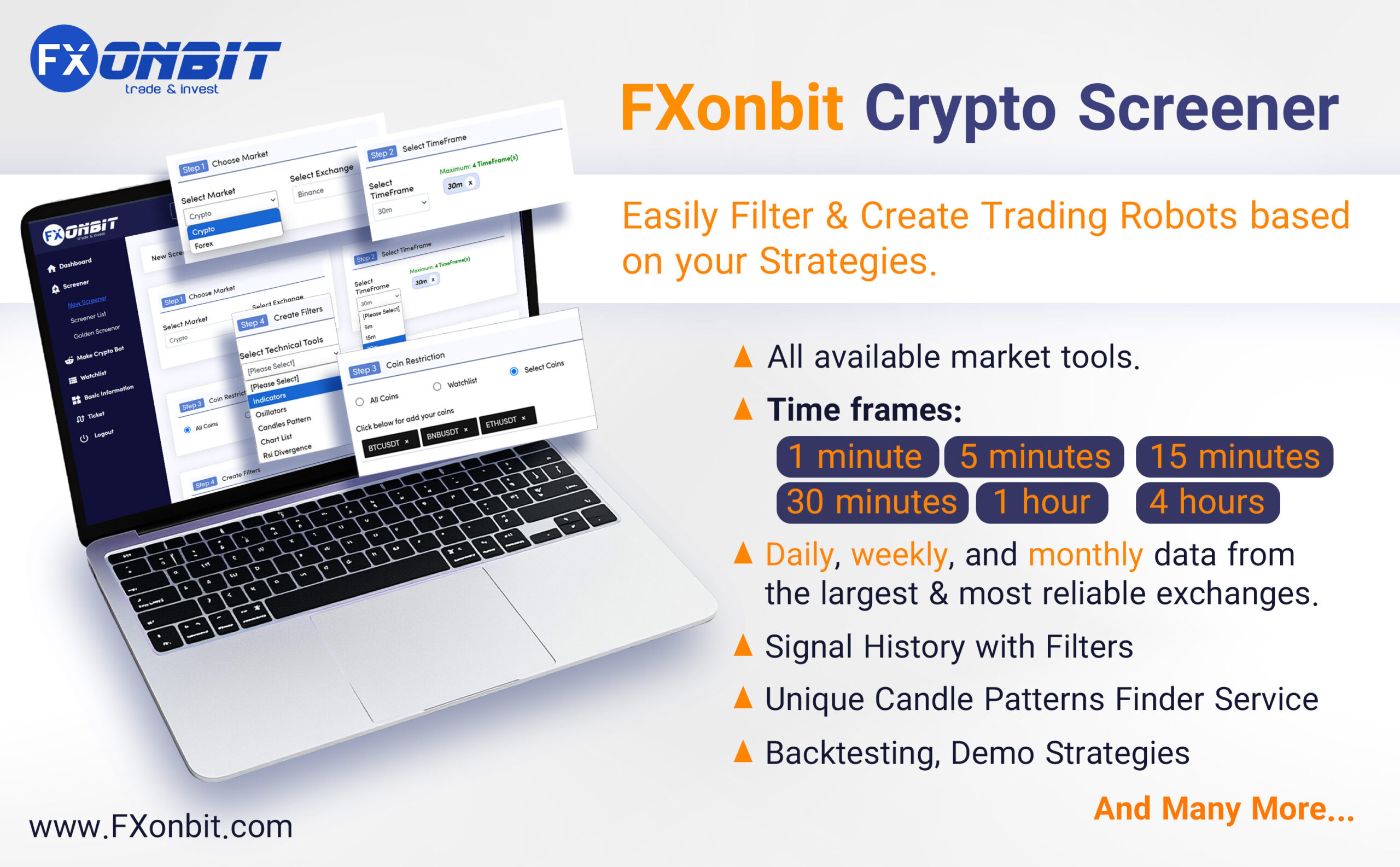
Why FXonbit’s Advanced Crypto Screener Is Perfect for All Trading Styles
At FXonbit, we understand that every trader’s strategy is unique. That’s why our advanced crypto screener is equipped with features that cater to both long-term investors and day traders. Here’s what sets us apart:
- Comprehensive Filters: Customize filters for market cap, volume, volatility, and more.
- Advanced Indicators: Access essential tools like RSI, MACD, Bollinger Bands, and moving averages.
- Real-Time Alerts: Stay ahead of the market with instant notifications tailored to your strategy.
- User-Friendly Interface: Simplify complex analyses with an intuitive design.
- Reliable Data: Get accurate and up-to-date metrics for informed decision-making.
Whether you’re building a long-term portfolio or making quick trades, FXonbit’s screener provides the tools you need to succeed. Visit FXonbit.com today to explore the ultimate crypto screener for all trading styles.
By tailoring your crypto screener to match your trading style, you can make more informed decisions and achieve your financial goals. With tools like FXonbit’s Advanced Crypto Screener, the path to smarter trading is clearer than ever.

Hi, I’m Asena, a Senior Marketing Specialist with over 8 years of experience and a deep passion for trading knowledge. I have a genuine fascination with the world of Crypto and Forex markets. Over the past 6 years, I’ve dedicated myself to writing about technical analysis, fundamental analysis, and the intricate dynamics of these markets. My mission is to provide the most complete and comprehensive data to empower my audience with actionable insights. I truly love what I do and constantly strive to deliver the best possible results for my readers and users.
Related Article



Leave a Comment

Asena Taremi