28 Dec

What Are Pips in Forex Trading?
A pip (short for “percentage in point”) is the smallest price movement in a currency pair’s exchange rate. It represents a standard unit of measurement for changes in the value of a currency pair, making it a fundamental concept in forex trading.
Read more: FXonbit CandleStick Pattern Finder Service: Your Gateway to Smarter Forex and Crypto Trading
Understanding Pips:
- Standard Definition:
- For most currency pairs, 1 pip equals 0.0001 (the fourth decimal place).
- Example: If EUR/USD moves from 1.1000 to 1.1005, it has increased by 5 pips.
- Exception – JPY Pairs:
- For currency pairs involving the Japanese yen (e.g., USD/JPY), 1 pip equals 0.01 (the second decimal place).
- Example: If USD/JPY moves from 110.25 to 110.50, it has increased by 25 pips.
Why Pips Matter:
- Measure Profit and Loss: Pips quantify your trading performance. For instance, if you bought EUR/USD at 1.1000 and sold it at 1.1020, you gained 20 pips.
- Set Trading Goals: Traders often set targets or stop-loss levels in pips, such as aiming for a 50-pip profit.
- Universal Language: Pips create a standardized way for traders worldwide to discuss price changes without confusion.
Read more: A Comprehensive Guide to Forex Scanner
What Is the Value of a Pip?
The value of a pip depends on:
- Currency Pair
- Trade Size (Lot)
- Currency of Your Account
Explore more: Best Forex Screeners for Day Trading

Read More: Why Non-Farm Payrolls (NFP) Affect the Forex Market
Calculating Pip Value:
- For Standard Lots (100,000 units): 1 pip = $10 for most pairs.
- For Mini Lots (10,000 units): 1 pip = $1.
- For Micro Lots (1,000 units): 1 pip = $0.10.
Example Calculation:
- Trading 1 standard lot of EUR/USD with an account in USD:
- Pip value = (0.0001 / Exchange Rate) x Lot Size.
- At an exchange rate of 1.1000: (0.0001 / 1.1000) x 100,000 = $9.09 per pip.
Why It Matters:
- Risk Management: Knowing the pip value helps you size positions correctly and manage risks effectively.
- Profit Calculation: Pip values translate your gains or losses into monetary terms.
Read more: What is Forex Screener? Free Trading Opportunities with a Comprehensive Tool
What Is the Spread in Forex?
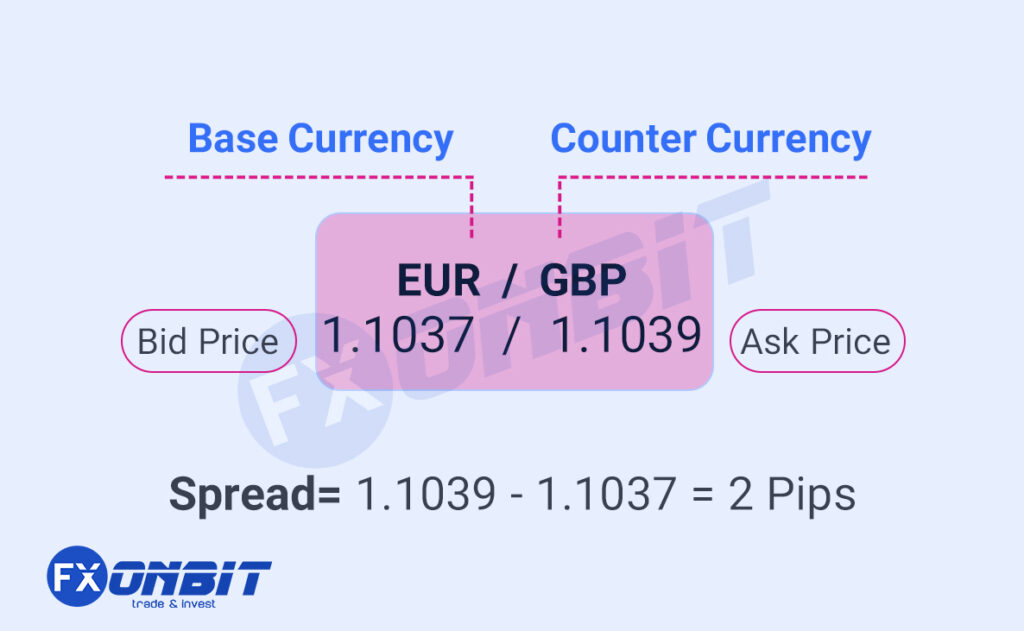
The spread is the difference between the bid (sell) price and the ask (buy) price of a currency pair. It represents the cost of trading and is how brokers earn money on trades.
Read More: Top 10 Forex Trading Strategies for Consistent Profits
Types of Spread in forex:
- Fixed Spread:
- Remains constant regardless of market conditions.
- Common with brokers offering dealing-desk models.
- Advantage: Predictable costs.
- Disadvantage: Often wider than variable spreads.
- Variable Spread:
- Changes based on market liquidity and volatility.
- Common with brokers offering non-dealing-desk models.
- Advantage: Narrower spreads during stable markets.
- Disadvantage: Can widen significantly during volatile periods.
Discover More: 10 Proven Forex Risk Management Strategies 2025 to Protect Your Capital

Read More: Trading Chart Patterns: What Are Chart Patterns? + PDF
How Spreads Are Measured:
- Measured in pips.
- Example: If EUR/USD has a bid price of 1.1000 and an ask price of 1.1002, the spread is 2 pips.
Read more: Weighted Moving Average (WMA): A Comprehensive Guide for Traders
How the Spread Affects Your Trading
Impact on Entry and Exit:
- When you open a trade, you immediately incur the cost of the spread.
- To break even, the market must move by at least the spread in your favor.
Spread and Trade Types:
- Scalping:
- Tight spreads are crucial since profits are small but frequent.
- Day Trading:
- Moderate spreads are acceptable but still impactful.
- Swing Trading:
- Wider spreads may be less significant since trades aim for larger price movements.
Foorex Concept: Forex Leverage: What Every Trader Needs to Know
Factors That Influence Spreads
- Liquidity:
- Major pairs (e.g., EUR/USD) have tighter spreads due to high liquidity.
- Exotic pairs (e.g., USD/TRY) have wider spreads because of lower liquidity.
- Volatility:
- During high-impact news events, spreads can widen significantly.
- Broker Type:
- Dealing-desk brokers may offer fixed spreads, while ECN/STP brokers provide variable spreads.
- Time of Day:
- Spreads are tightest during active market hours (e.g., London and New York sessions).
Read this: A Comprehensive Guide to Hedging in Forex and Finance
Tips for Managing Spreads and Pips Effectively
- Choose a Broker Wisely:
- Opt for a broker with competitive spreads and a transparent fee structure.
- Trade Liquid Pairs:
- Focus on major pairs for lower spreads and predictable pip values.
- Avoid News Trading Without Preparation:
- Spreads can spike during major news releases, increasing your costs.
- Use a Demo Account:
- Practice calculating pip values and understanding spread costs before live trading.
- Monitor Spreads in Real Time:
- Be aware of spread changes, especially during low-liquidity periods like the rollover hour.
- Adjust Position Sizes:
- Use pip values to ensure your risk per trade aligns with your account size and strategy.
Chart Pattern: Bump and Run Pattern: A Comprehensive Guide
Fun Fact: Why Are Pips Called Pips?
The term “pip” is believed to have originated from “percentage in point” or “price interest point,” highlighting its role as the smallest measurable change in currency prices. Whatever the origin, it’s a cute little word for such an essential concept!
Bringing It All Together
Understanding pips and spreads is a cornerstone of successful forex trading. Pips measure price changes and help calculate profits, while spreads represent the cost of entering and exiting trades. By mastering these concepts, you can:
- Plan Trades Better: Know your costs upfront and aim for realistic profit targets.
- Manage Risks Smartly: Use pip values to calculate position sizes and safeguard your account.
- Save Money: Minimize trading costs by selecting the right pairs, brokers, and trading times.
Forex trading doesn’t have to be overwhelming. Keep it simple, stay informed, and treat pips and spreads as your allies on the journey to becoming a skilled and confident trader. Happy trading!

Related Article