18 Jan

Range trading is one of the most popular and effective trading strategies, especially in the highly volatile cryptocurrency market. By identifying price ranges and trading within them, traders can capitalize on predictable price movements.
This guide provides an in-depth look at range trading, including strategies, tools, and tips to maximize your profits.
Start Our Crypto & Forex Dashboard For Free
Read more: FXonbit CandleStick Pattern Finder Service: Your Gateway to Smarter Forex and Crypto Trading
What Is Range Trading?
Range trading is a popular trading strategy that capitalizes on predictable price movements within a specific range. It is most effective in markets that lack a strong trend and exhibit horizontal price movements. Here’s a more detailed breakdown of its key components, advantages, and considerations:
Key Elements of Range Trading
- Support Level:
- The support level is the lower boundary of the price range.
- It represents a price point where demand outweighs supply, causing the price to bounce back upward.
- Traders often look for confirmation, such as bullish candlestick patterns or increased volume, to validate this level before entering a buy position.
- Resistance Level:
- The resistance level is the upper boundary of the price range.
- At this level, selling pressure exceeds buying interest, causing the price to reverse downward.
- Traders look for bearish signals, such as a rejection candle or declining momentum, to confirm a sell opportunity.
- Price Channel:
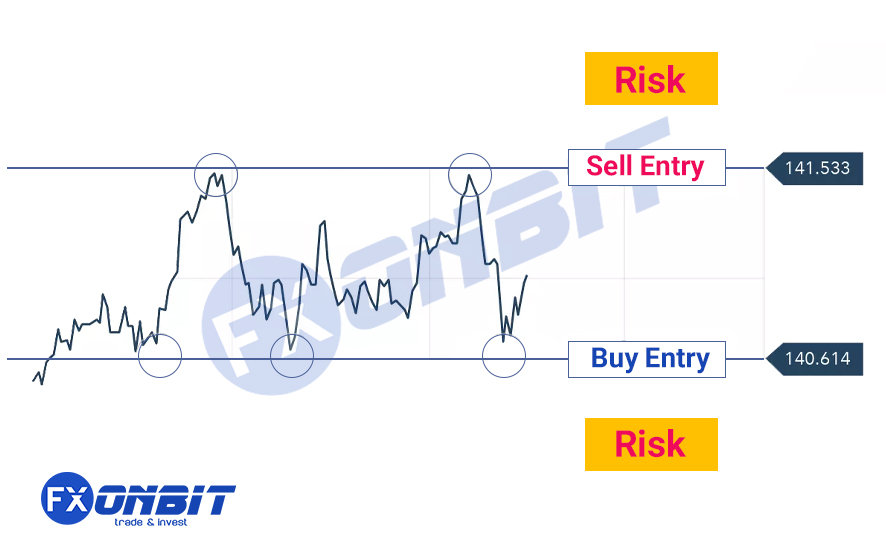
- The space between the support and resistance levels is known as the price channel.
- Prices oscillate within this channel, offering opportunities for traders to buy near support and sell near resistance repeatedly.
Explore more: What is Crypto Screener? The Best Crypto Screener
Key Indicators Used in Range Trading
- Relative Strength Index (RSI): Helps identify overbought and oversold conditions near resistance and support, respectively.
- Moving Averages: Used to filter out false breakouts and confirm if the range persists.
- Bollinger Bands: A useful tool for gauging price volatility and identifying when the price is likely to reverse within a range.
Explore more: Top Indicators in Crypto Screeners for Effective Trading
Why Choose Range Trading?
- Ideal for Sideways or Volatile Markets:
- In markets like cryptocurrencies, where prices often move sideways between sharp trends, range trading can be a reliable approach to extract profits.
- Simplicity:
- The strategy is straightforward and doesn’t require complex algorithms or advanced market knowledge.
- With basic tools like support and resistance identification, traders can find profitable setups.
- Frequent Trading Opportunities:
- Price oscillations within a range provide multiple opportunities to enter and exit trades, making it a highly active strategy.
Read More: Trend Analysis: A Comprehensive Guide
Tips for Successful Range Trading
- Confirm the Range:
- Ensure the price consistently reverses at support and resistance before committing to trades.
- Look for at least three touches of each boundary to validate the range.
- Use Stop Losses:
- Place stop losses just outside the range boundaries to protect against unexpected breakouts.
- Monitor Breakouts:
- Ranges don’t last forever; be prepared for breakouts, which can signal the start of a new trend.
- False breakouts can be trading opportunities themselves but require skill to trade effectively.
- Risk Management:
- Avoid over-leveraging, as reversals can happen quickly within ranges, especially in volatile markets.
Read more: How to Customize Crypto Screener to Match Your Trading Strategy
Example of Range Trading in Crypto
Imagine Bitcoin is trading between $25,000 (support) and $28,000 (resistance):
- Buy near $25,000 when RSI signals oversold conditions or there’s a bullish candlestick pattern.
- Sell near $28,000 when RSI indicates overbought conditions or there’s a bearish rejection at resistance.
This predictable pattern can be repeated until the range is broken.

How to Identify a Range
Analyze Historical Price Data
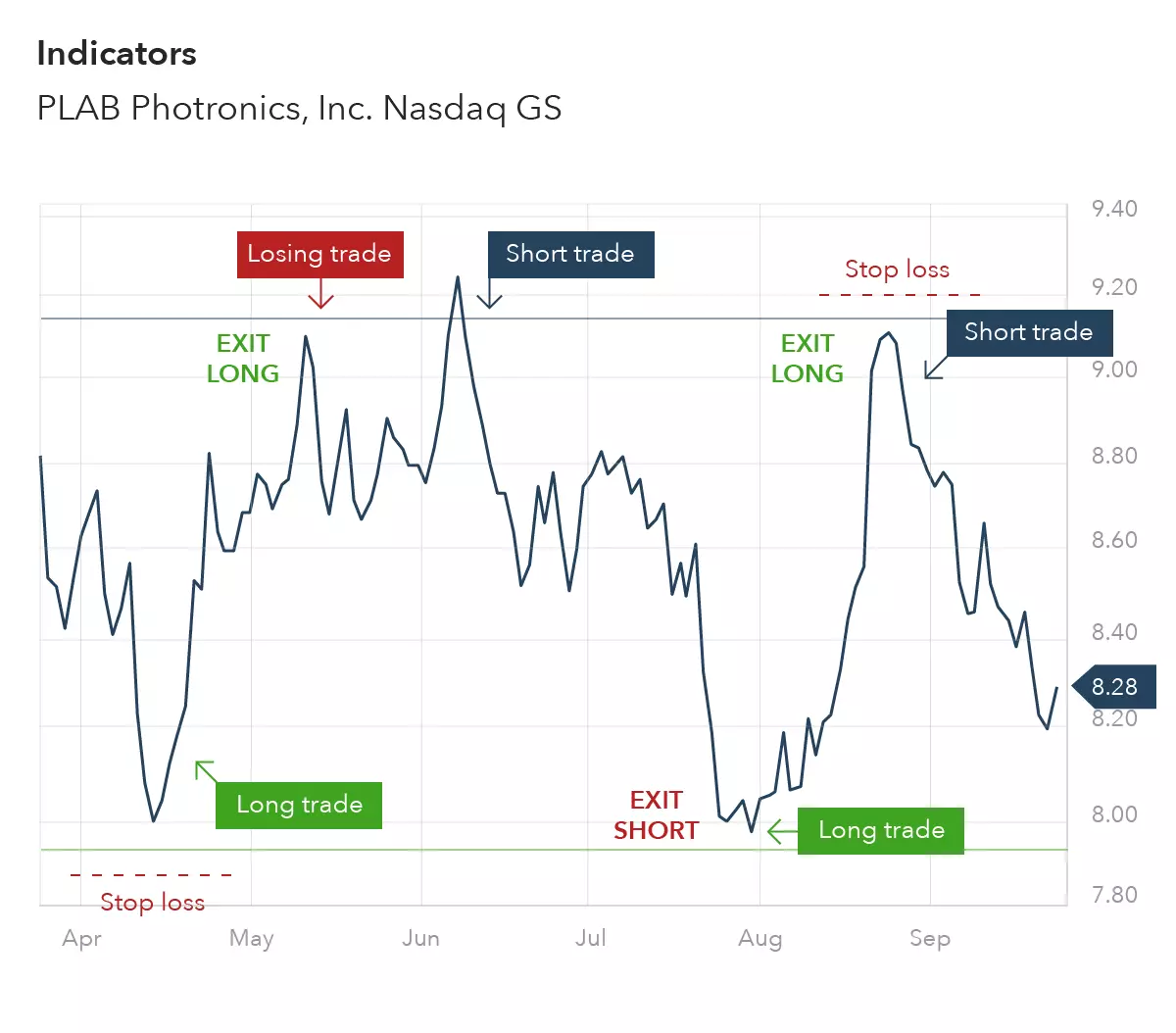
- Reviewing past price movements on charts helps pinpoint areas where the price repeatedly bounces between a specific high (resistance) and low (support).
- Look for zones where price reversals have occurred multiple times, forming a recognizable pattern of oscillation.
Read: Crypto Screener vs Stock Screener
Use Technical Indicators
- Indicators like Bollinger Bands can highlight overbought and oversold zones within a range.
- The Relative Strength Index (RSI) helps confirm if price is approaching a reversal point near support or resistance.
- Moving Averages provide a smoother view of price action and can act as dynamic support or resistance within the range.
Look for Consolidation
- Ranges often develop when the market is in consolidation, meaning there’s no strong directional trend.
- Consolidation phases appear as sideways movements where neither buyers nor sellers dominate, creating a balanced price channel.
Read More: Trading Chart Patterns: What Are Chart Patterns? + PDF

Strategies for Range Trading
- Buy at Support, Sell at Resistance
- Objective: To profit from the predictable price reversals that occur at the boundaries of the range.
- Execution:
- Monitor the price as it approaches the support level and look for bullish signals (e.g., hammer candlestick or RSI indicating oversold conditions) to place a buy order.
- As the price nears the resistance level, watch for bearish signals (e.g., shooting star candlestick or RSI indicating overbought conditions) to place a sell order.
- Always set stop-loss orders just beyond the range boundaries to manage risk in case of breakouts.
- Breakout Trading
- Objective: To take advantage of strong price movements that occur when the range is broken, indicating the start of a new trend.
- Execution:
- Identify potential breakout points by analyzing patterns like increasing volume or narrowing ranges (e.g., a triangle formation).
- Enter the trade as the price closes above resistance (for upward breakouts) or below support (for downward breakouts).
- Place stop-loss orders just inside the range to protect against false breakouts.
- Use a trailing stop to capture more profit as the new trend develops.
- Use Oscillators
- Objective: To confirm whether the price is overbought or oversold, helping refine entry and exit points within the range.
- Execution:
- Apply indicators like the Relative Strength Index (RSI) or Stochastic Oscillator to identify conditions where the price is likely to reverse.
- For example, if RSI falls below 30 (oversold), it signals a potential buying opportunity near support. Similarly, if RSI exceeds 70 (overbought), it suggests a selling opportunity near resistance.
- Combine oscillator signals with price action and candlestick patterns to improve the accuracy of your trades.
These strategies can be tailored to suit different risk tolerances and market conditions, making range trading versatile and effective in capturing profits in non-trending markets.
Read This: What is a Trading Journal and How to Use It Effectively
Automation Tool for Range Trading
Leverage automated trading bots, like those available on FXonbit, to execute trades based on predefined strategies.
Risk Management in Range Trading
Set Stop-Loss Orders
- Why?: Protecting capital is essential, as prices can unexpectedly break out of the range and lead to significant losses.
- How?:
- Place stop-loss orders just outside the range boundaries: below the support level for long trades and above the resistance level for short trades.
- This ensures minimal losses if the price moves against your position.
- For example, if support is at $50, place your stop-loss at $49.50 for added safety.
Position Sizing
- Why?: Controlling the size of your trades helps limit potential losses and preserves your overall capital.
- How?:
- Follow the rule of risking no more than 1-2% of your total trading capital on a single trade.
- Calculate position size by considering your stop-loss distance and risk tolerance.
- For instance, with a $10,000 account and a 1% risk per trade, your maximum loss is $100. If your stop-loss is $2 away from your entry, trade no more than 50 shares ($100 ÷ $2).
Explore more: How to Use Volume to Confirm Market Trends and Read Market Sentiment
Monitor Volume
- Why?: Volume is a critical indicator of market strength and can signal potential breakouts or reversals.
- How?:
- Observe volume levels as the price approaches support or resistance.
- Low volume near these levels might indicate a lack of conviction, increasing the likelihood of a breakout.
- High volume at a boundary often signals strong buying or selling pressure, which could confirm a reversal or breakout.
- Use this information to adjust your strategy, such as tightening stop-losses or preparing for a breakout trade.
Explore more: The Evolution of Crypto Screeners: From Manual Analysis to AI-Driven Insights

Common Mistakes to Avoid
Ignoring Breakouts
Ranges don’t last forever. Be prepared to adapt your strategy when the range breaks.
Overtrading
Stick to high-probability trades and avoid forcing trades in unclear ranges.
Neglecting Fees
Frequent trades can accumulate significant fees. Choose exchanges with low fees for range trading.
Advanced Tips
1. Combine Range Trading with Trend Analysis
Identify the larger market trend to avoid trading against it.
2. Use Multiple Timeframes
Analyze charts on different timeframes to confirm the validity of the range.
3. Leverage Alerts
Set alerts on trading platforms to notify you when the price approaches range boundaries.
Explore more: Liquidity; The Backbone of Financial Markets
Conclusion
Range trading is a powerful strategy for navigating the volatile cryptocurrency market. By understanding support and resistance levels, utilizing technical indicators, and following disciplined risk management practices, you can consistently profit from this approach.
Explore FXonbit’s range of tools and resources to take your range trading to the next level. Start trading smarter today!
Explore more: Analyzing Volume Patterns for Breakout & Reversal Signals
FAQs
1. Is range trading suitable for beginners?
Yes, it’s a simple and effective strategy that beginners can learn quickly.
2. How long do ranges typically last?
Ranges can last from a few hours to several weeks, depending on market conditions.
3. What happens when the price breaks out of the range?
A breakout can lead to a strong upward or downward trend. Adjust your strategy accordingly.
Master range trading with FXonbit and stay ahead in the dynamic world of cryptocurrency trading!


Hi, I’m Asena, a Senior Marketing Specialist with over 8 years of experience and a deep passion for trading knowledge. I have a genuine fascination with the world of Crypto and Forex markets. Over the past 6 years, I’ve dedicated myself to writing about technical analysis, fundamental analysis, and the intricate dynamics of these markets. My mission is to provide the most complete and comprehensive data to empower my audience with actionable insights. I truly love what I do and constantly strive to deliver the best possible results for my readers and users.
Related Article



Leave a Comment

Asena Taremi